I work efficiently and thoughtfully, paying close attention to detail without losing sight of the bigger picture. The result is well thought out deliverables that supports both people and the organisations behind it.
Bringing Creative Services In-House
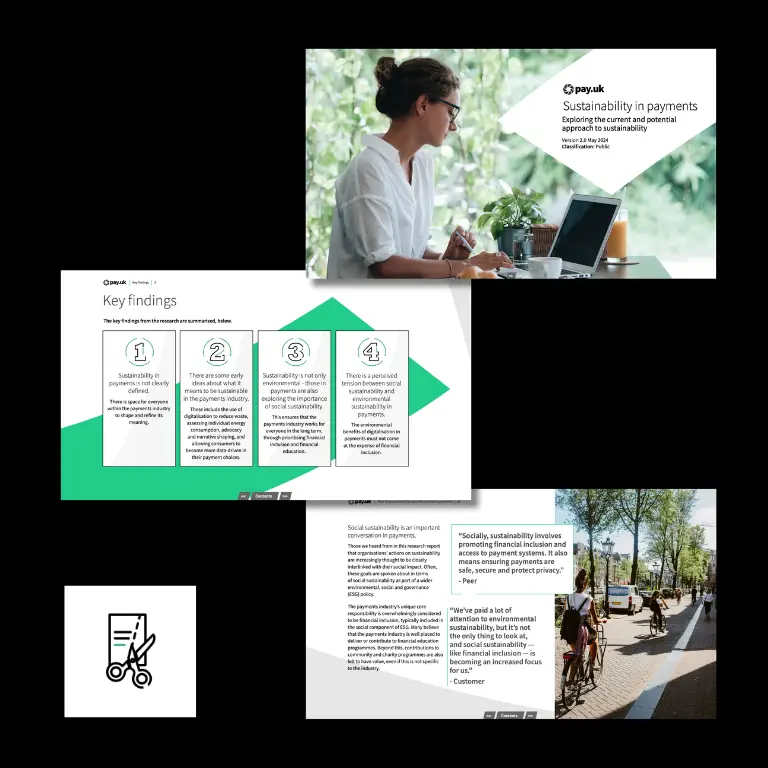
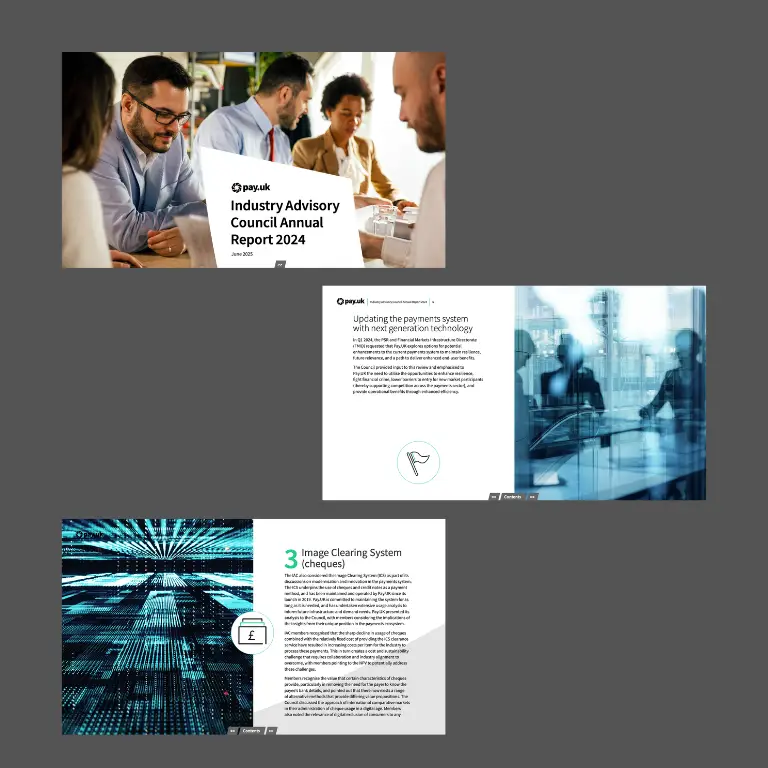
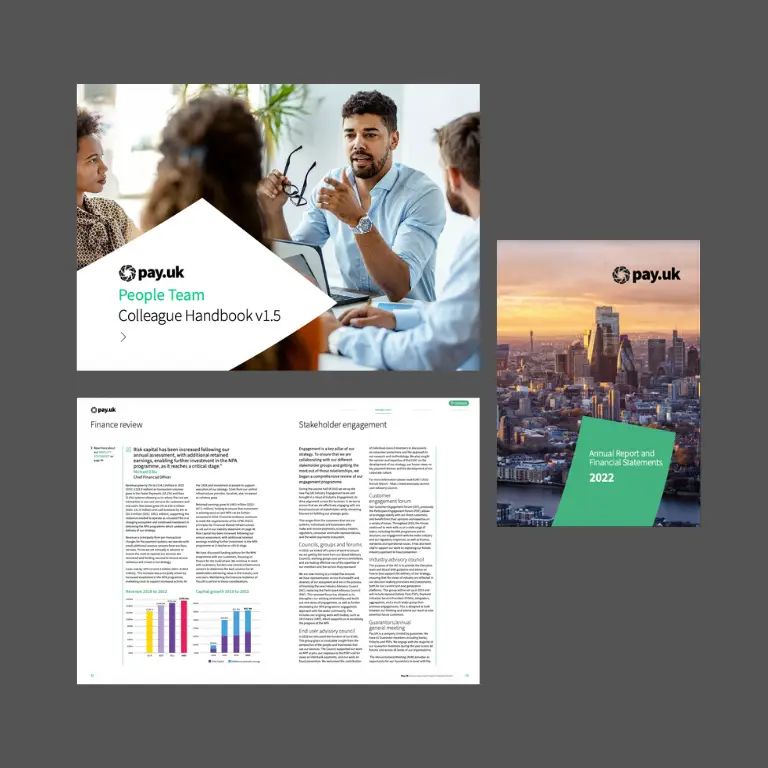
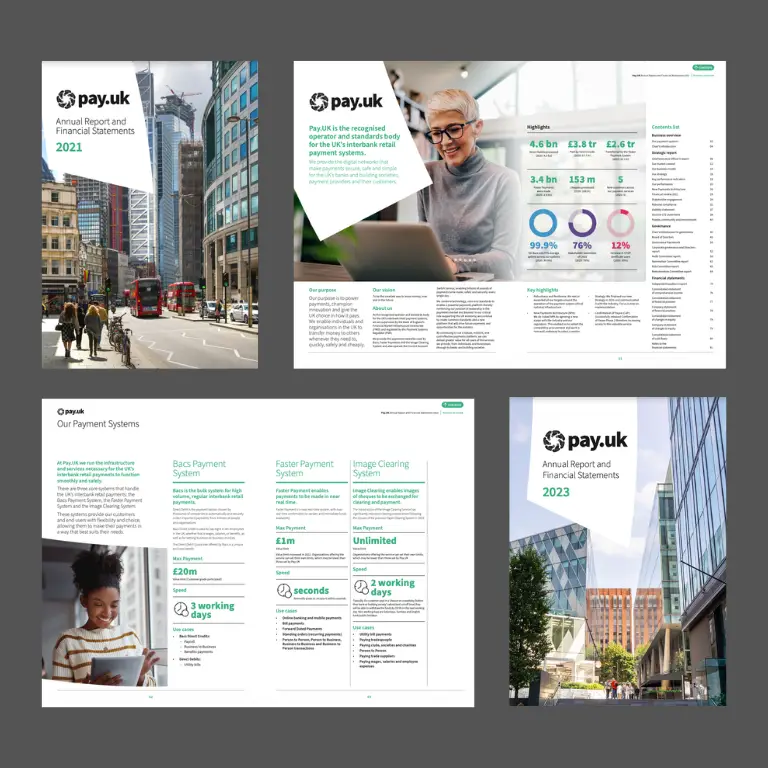
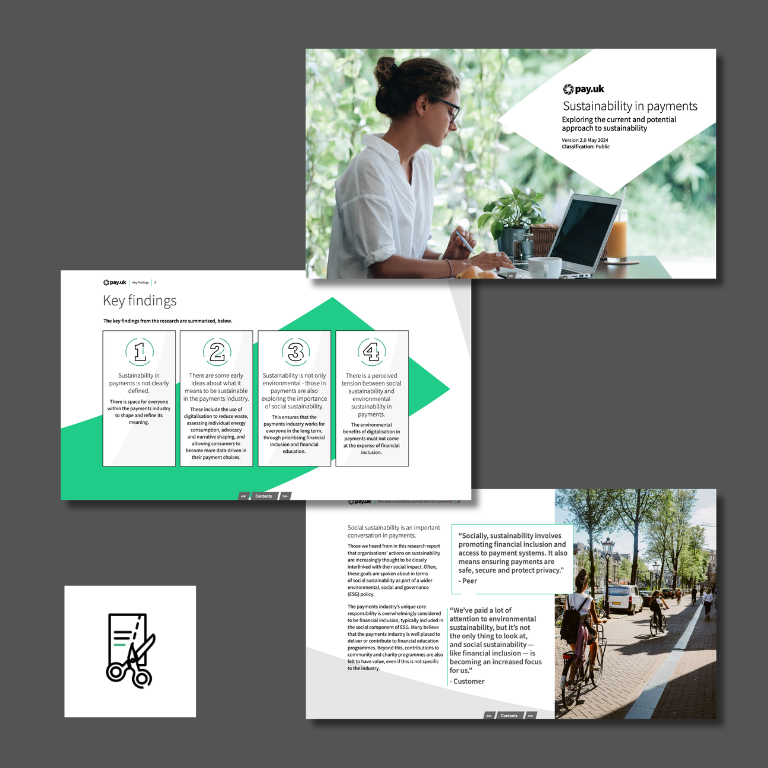
Pay.UK relied on external agencies for website updates and publication design. This increased costs, slowed delivery times and limited flexibility when urgent changes were needed.
I reviewed the existing workflow and identified opportunities to bring more design and production work in-house. I worked closely with stakeholders to understand requirements, improve processes and build confidence in an internal creative service.
I took ownership of website management, publication design and creative production. New templates, processes and design standards were introduced to improve consistency and speed of delivery while reducing dependence on external suppliers.
Website and publication design were successfully brought in-house, saving approximately £12,000 in production costs. The organisation gained greater control over its communications, faster turnaround times and a stronger internal design capability.
Turning research data into engaging audience stories
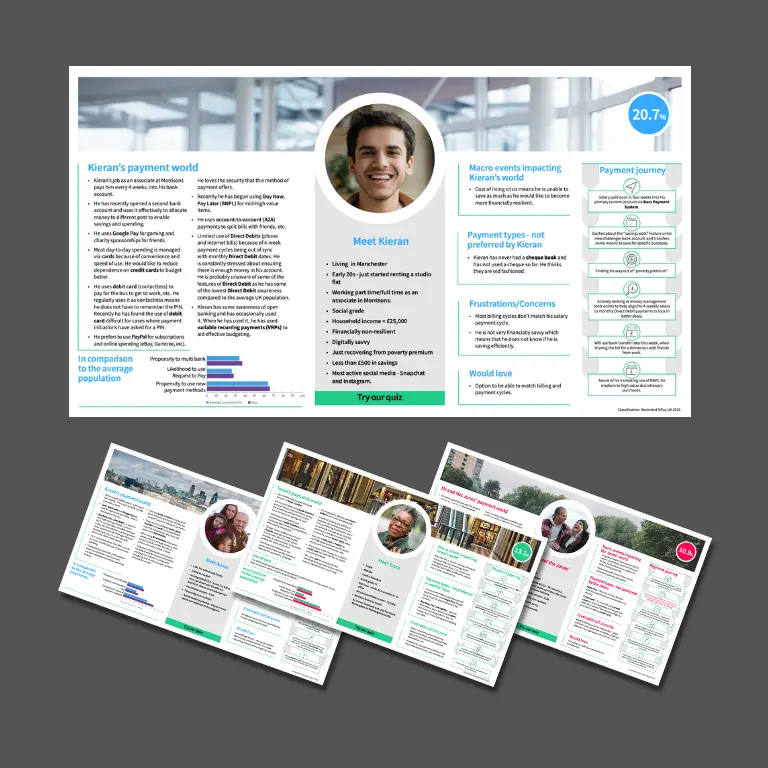
The Research and Insight team had gathered a valuable set of consumer insight data, built around behavioural patterns, demographics and statistical findings.
At the time, the information existed mainly as notes and raw data points. The original idea was to place a few isolated “did you know?” statistics onto the website, but there was no clear direction on how the information could be presented in a meaningful or engaging way.
The risk was that important insights would be overlooked because the data lacked narrative, personality and visual clarity.
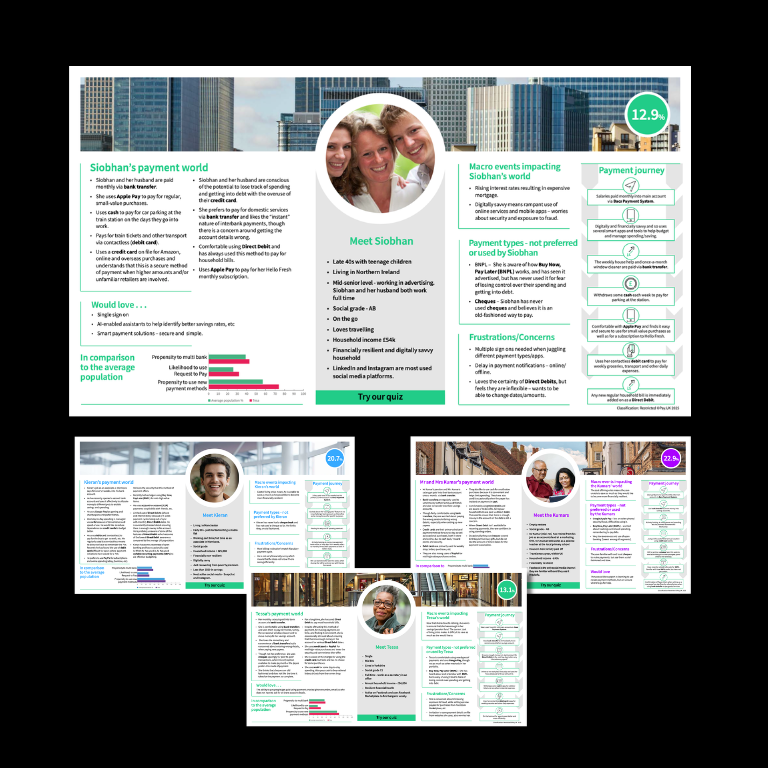
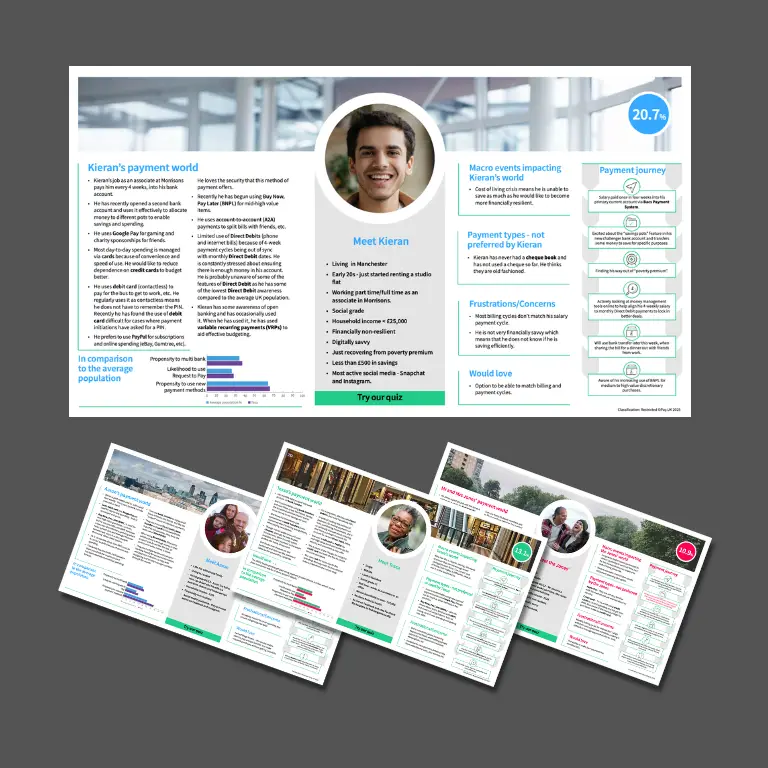
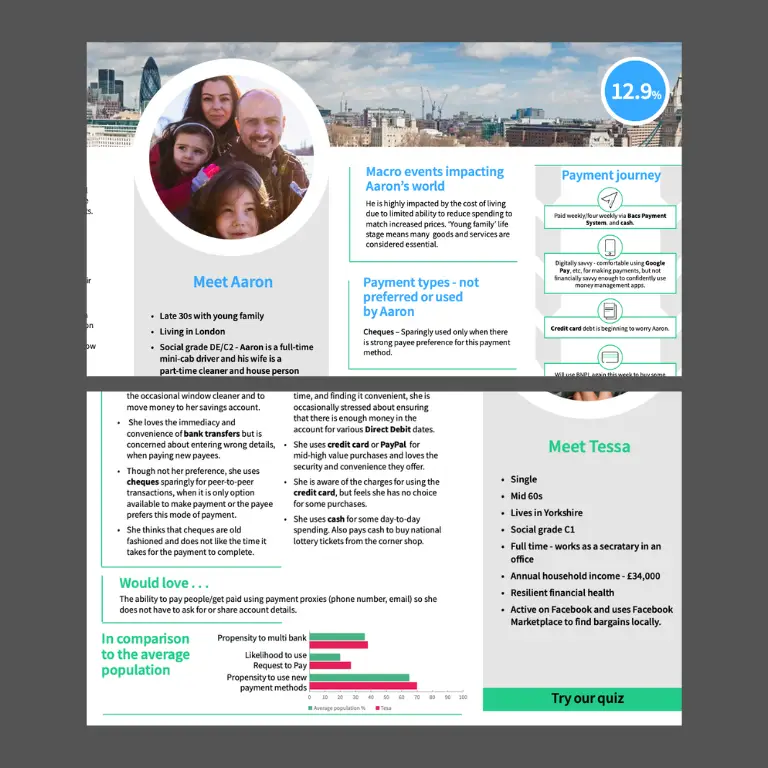
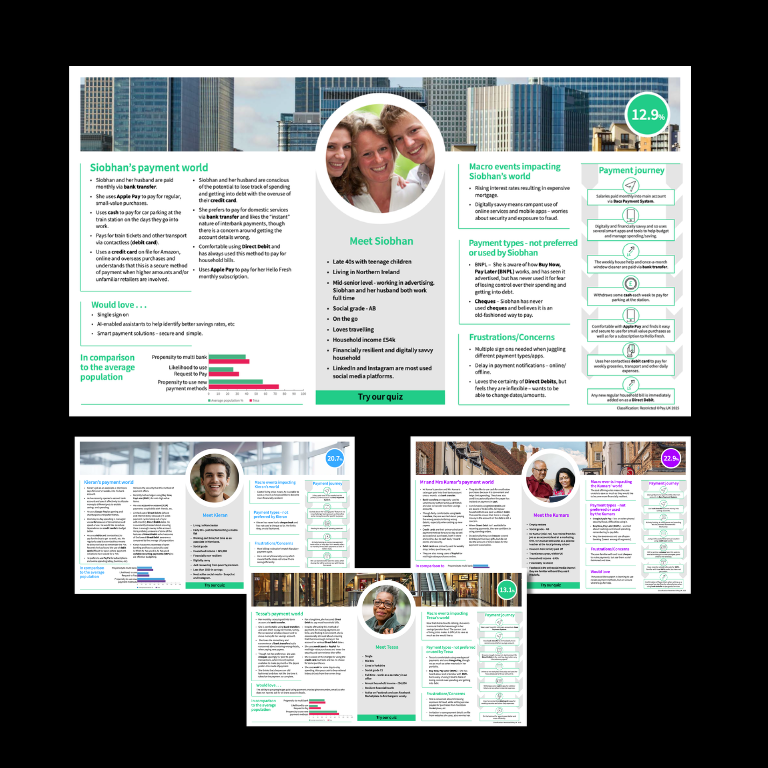
I recognised that the strength of the project wasn’t the statistics alone, it was the human behaviour behind them. Instead of treating the findings as disconnected data snippets, I transformed them into fully realised audience personas that felt relatable, memorable and easy to understand. I developed a creative concept where each persona became a distinct character with:
a visual identity
personality traits
behavioural insights
lifestyle indicators
supporting statistics and trends
The goal was to make complex research feel accessible and engaging for both internal teams and external stakeholders.
I designed a series of visually-led persona features that translated dense research into compelling audience stories. This included:
creating character-led persona profiles
selecting imagery that reflected each audience type
designing structured dashboard layouts
visualising data through graphs, tables and highlighted statistics
building clear content sections to guide the reader through key insights
The final outcome balanced analytical information with strong visual storytelling, allowing users to quickly absorb and interpret the data.
The transformation completely changed how the Research and Insight team viewed and used the material. What began as static data evolved into a polished communication tool that could be confidently presented to:
stakeholders
leadership teams
exhibitions
industry forums
The project helped the organisation communicate its research capabilities in a far more professional, engaging and strategic way. Most importantly, it demonstrated that data becomes far more valuable when people can clearly understand the story behind it.
Brand evolution at Pay.UK
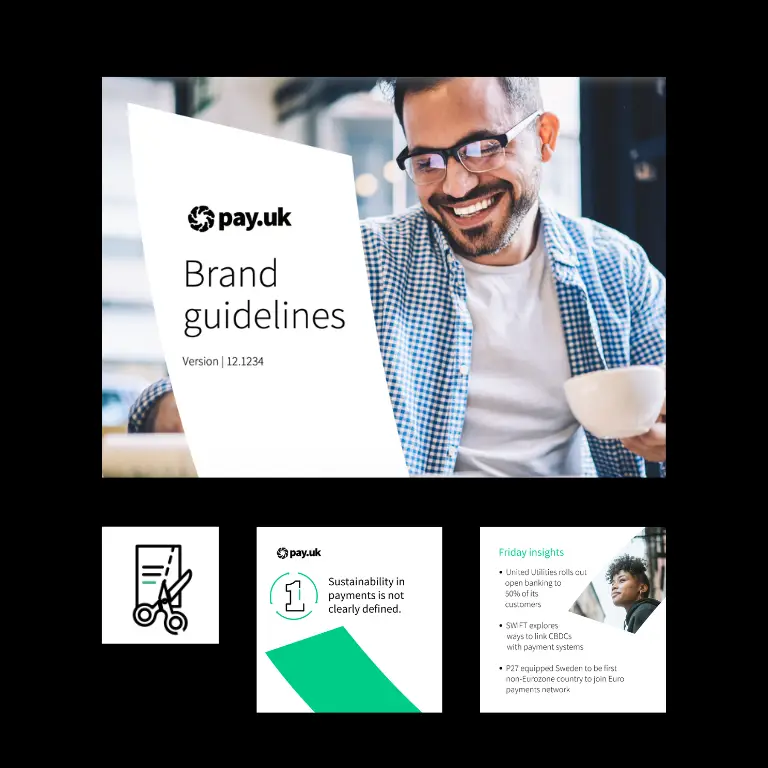
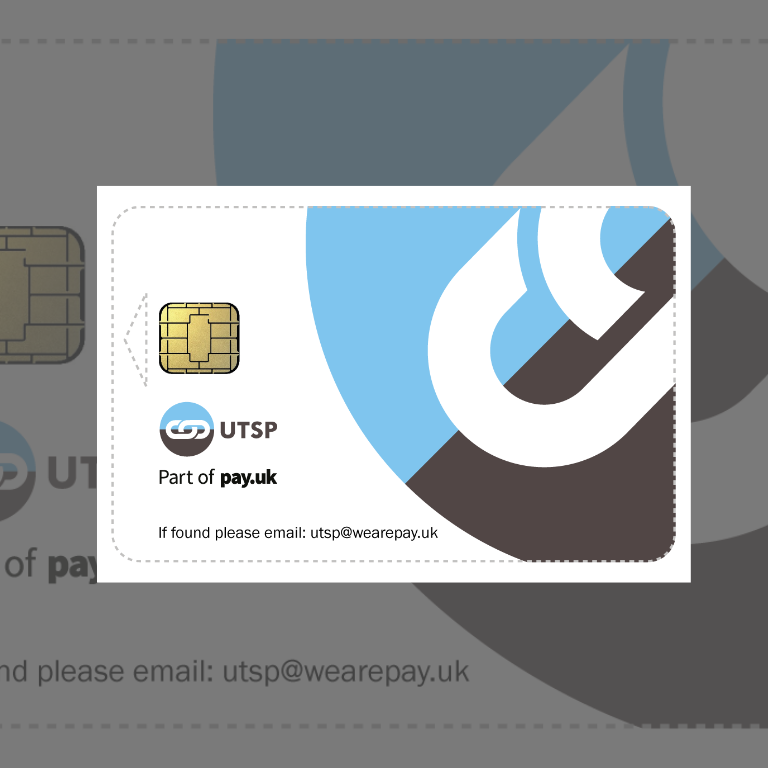
Following the transition from UK Payments Administration to Pay.UK, a new corporate identity was created by an external agency. While the rebrand was approved at board level and launched internally, the practical application of the new identity across the organisation had not been fully considered.
The communications team had limited involvement during development, and key functional assets needed for day-to-day business operations were missing. This created immediate challenges around rollout, usability and consistency across internal and external communications.
Drawing on my experience working with established brands including BBC, Universal and dunnhumby, I took ownership of the implementation phase.
I acted as the internal lead between Pay.UK and the agency, managing the transition from concept to operational use. This included reviewing brand assets, identifying practical gaps and translating static guidelines into a flexible working brand system suitable for a complex organisation.
I worked closely with communications stakeholders to ensure the new identity supported real business needs, not just visual presentation.
I led the internal rollout of the new brand and managed the full handover process from the agency, ensuring all assets, templates and technical files were delivered correctly.
This involved:
Identifying missing brand components required for business use
Creating additional digital assets and practical design tools
Developing templates for stationery, presentations and communications
Producing social media and online formats aligned to brand standards
Defining image treatments and supporting visual styles
Establishing practical governance for day-to-day design use
I also challenged aspects of the original system where it limited flexibility, working with the agency to refine assets that better supported organisational communications.
The successful implementation enabled Pay.UK to launch a consistent brand identity across digital, print and corporate communications while avoiding disruption to ongoing business activity.
Over the following two years, I led the natural evolution of the visual identity, introducing a broader colour palette, lighter visual language and more dynamic layouts. These enhancements retained the authority of the original identity while making the brand feel more accessible, modern and adaptable.
I also designed additional logos, expanded the image library standards and developed practical brand applications that improved consistency across teams.
The revised approach gained board approval and became the established visual standard across the organisation.
Delivering Design in a Highly Regulated Environment
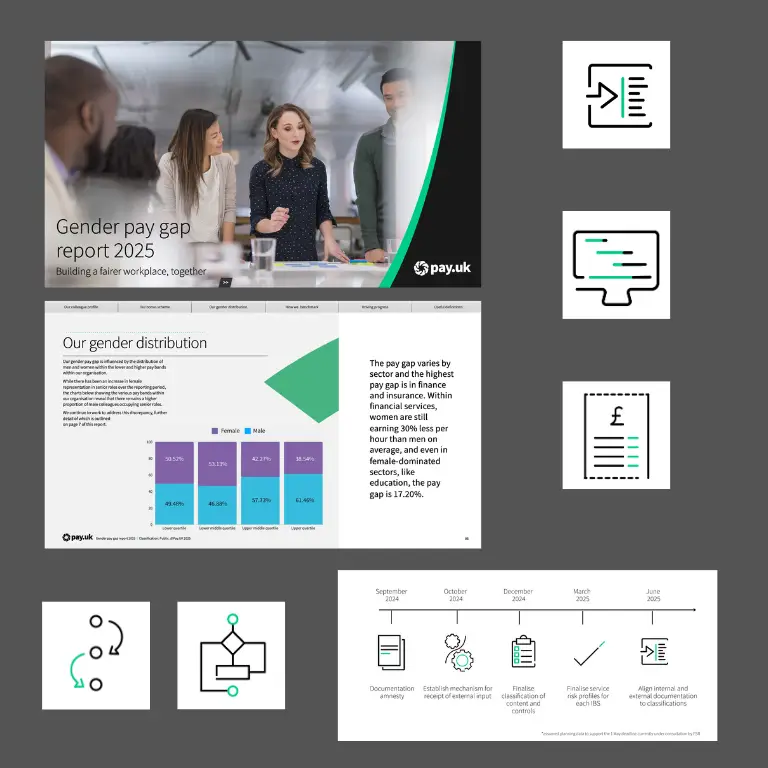
As the operator of critical UK payment systems, Pay.UK required clear, accurate and compliant communications across multiple channels. Design work had to balance creativity with governance and regulatory requirements.
I worked closely with communications, policy and subject matter experts to understand complex information and ensure accuracy.
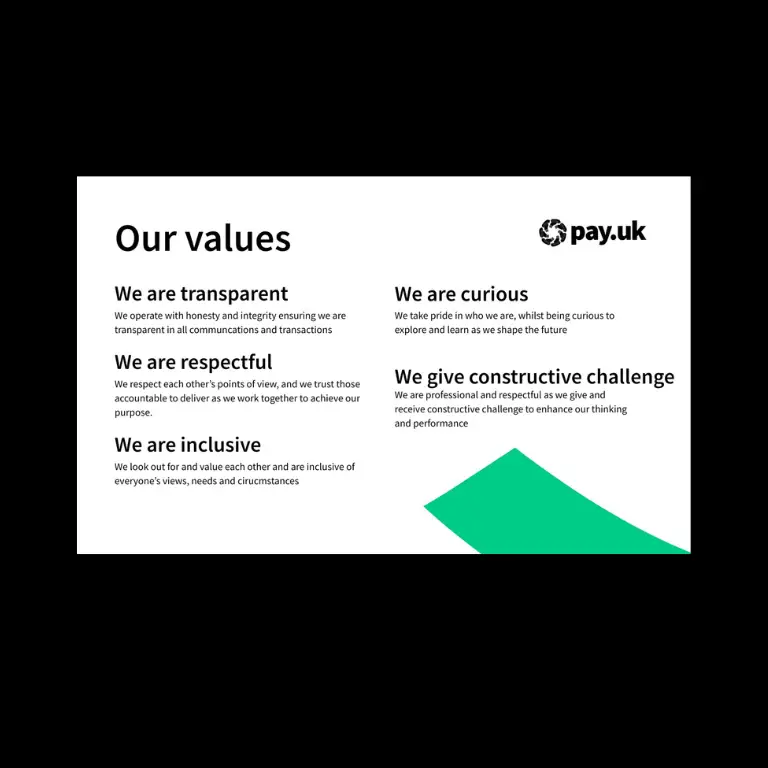
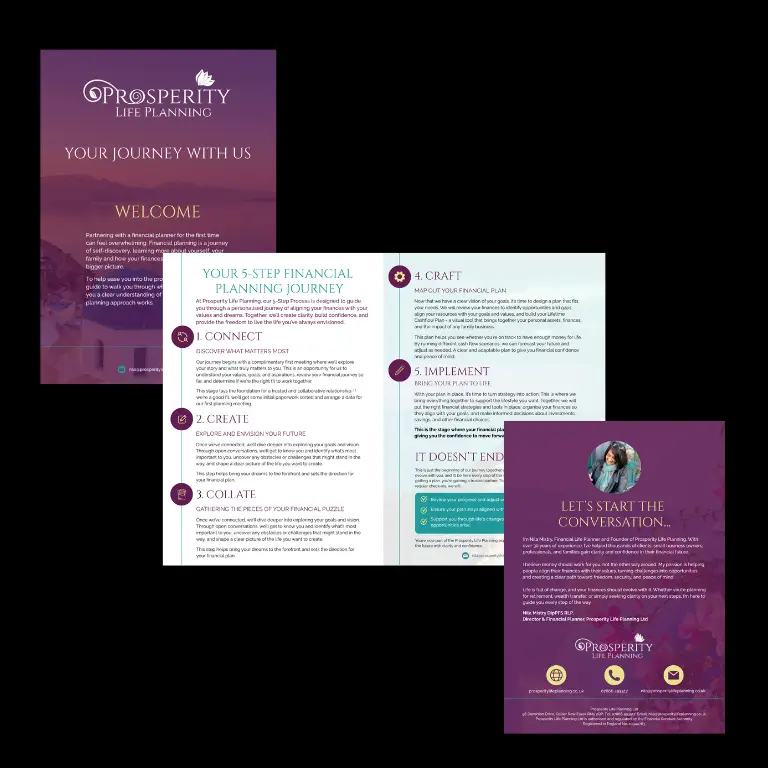
I translated technical and often complex content into accessible reports, presentations, websites and communication materials for internal and external audiences. I translated technical and often complex content into accessible reports, presentations, websites and communication materials for internal and external audiences. Being open and transparent and valuing our colleagues and respecting their backgrounds.
Complex information became easier to understand and engage with, helping stakeholders access important information while maintaining compliance and brand consistency.
Modernising a member platform for 21,000 users
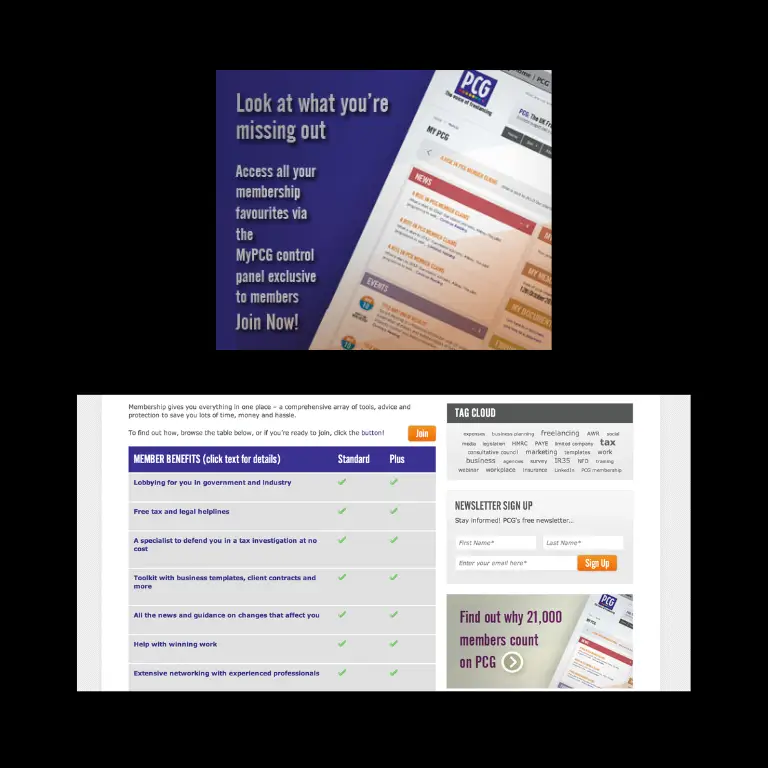
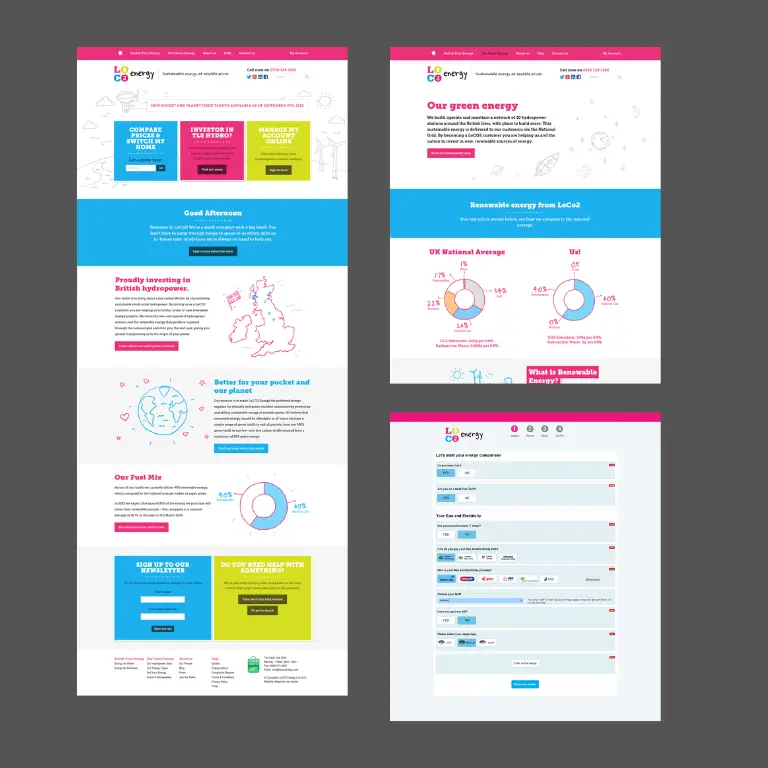
When I joined IPSE (formerly the Professional Contractors Group), the organisation’s website was functioning as a key knowledge hub for members, but the platform had become outdated and increasingly difficult to manage.
With over 21,000 paying members relying on the site for resources, updates and support, the digital experience no longer reflected the organisation’s value or professionalism.
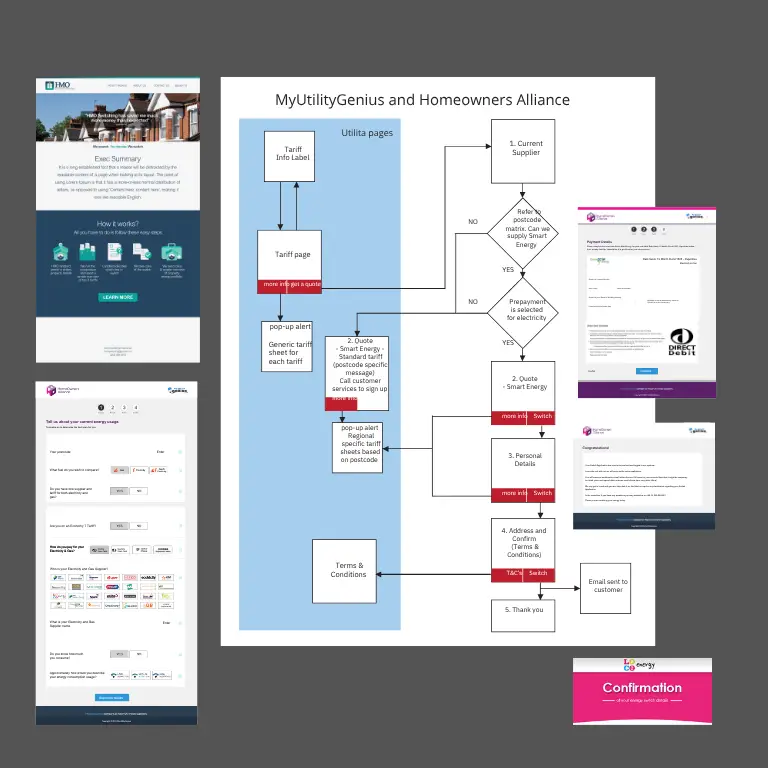
The challenge involved far more than a visual refresh. The existing content structure was fragmented, user journeys lacked clarity, and the organisation needed to migrate from Joomla to a new Drupal-based membership platform without disrupting member access or engagement.
At the same time, the business needed stronger digital communications, improved usability and a scalable platform that could support future growth.
I worked closely with developers, marketing managers and internal stakeholders to redefine how the platform should function from both a user and business perspective.
Using an agile workflow, I helped plan and restructure the site architecture to improve, usability, navigation, accessibility, content organisation and member experience
I focused on simplifying how users accessed information while ensuring the platform supported key organisational goals such as membership growth, communication and engagement.
Alongside the website migration, I also explored opportunities to strengthen the wider digital ecosystem through:
responsive email campaigns
landing pages
promotional assets
improved digital communications
SEO and web standards improvements
I led the migration from Joomla to Drupal, helping transform the platform into a more structured, user-friendly and scalable digital experience.
Key deliverables included:
restructuring the website architecture and content hierarchy
improving usability and accessibility across the platform
implementing member access functionality
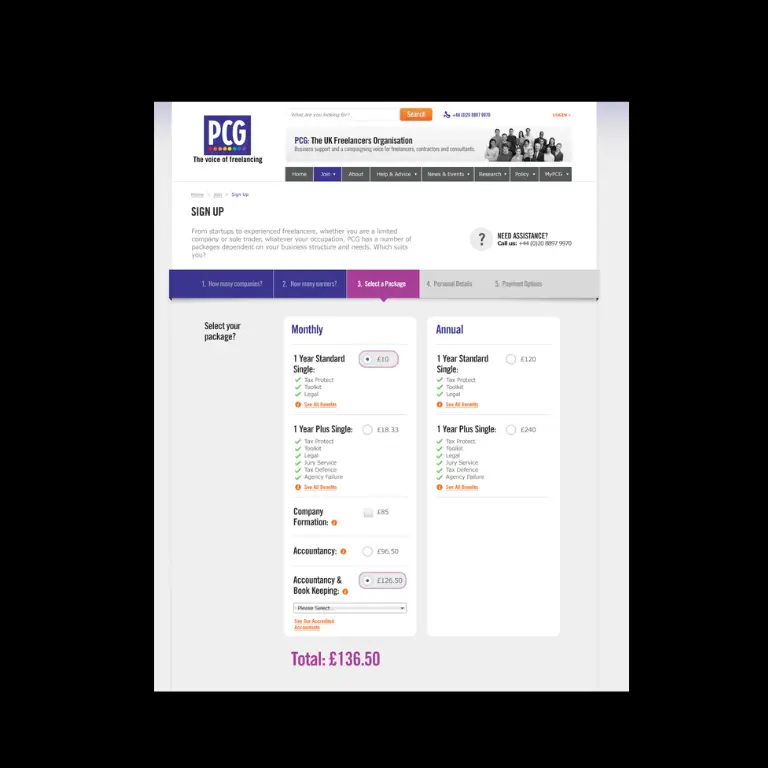
planning and delivering sign-up and payment journeys
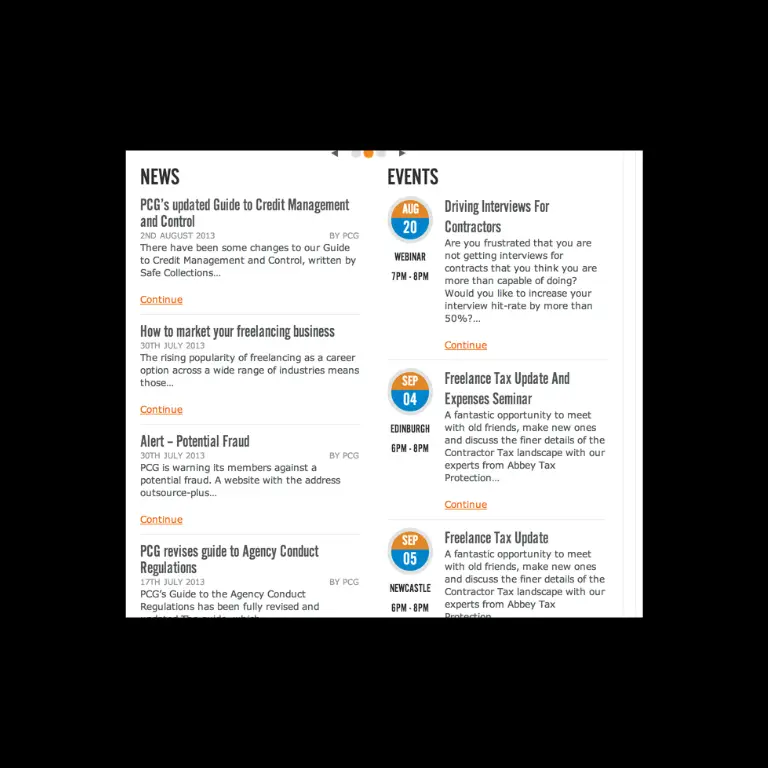
launching events and news sections
integrating a CRM system
producing digital campaign assets and landing pages
building responsive HTML email campaigns using Mailchimp
managing and developing multiple Drupal and WordPress platforms
I also presented digital recommendations and UX improvements to senior stakeholders across IT, marketing and commercial teams, helping align the platform with broader organisational objectives.
The successful launch of the new platform significantly improved the member experience and modernised the organisation’s digital presence.
The new website provided:
clearer access to member resources
improved navigation and content discovery
streamlined user journeys
stronger communication capabilities
a more professional and scalable online platform
In addition to the platform launch, website management processes and membership support systems were established internally, enabling teams to respond quickly and effectively to member needs.
The project helped position IPSE as a more digitally capable and member-focused organisation, while creating a stronger foundation for future engagement and growth.